
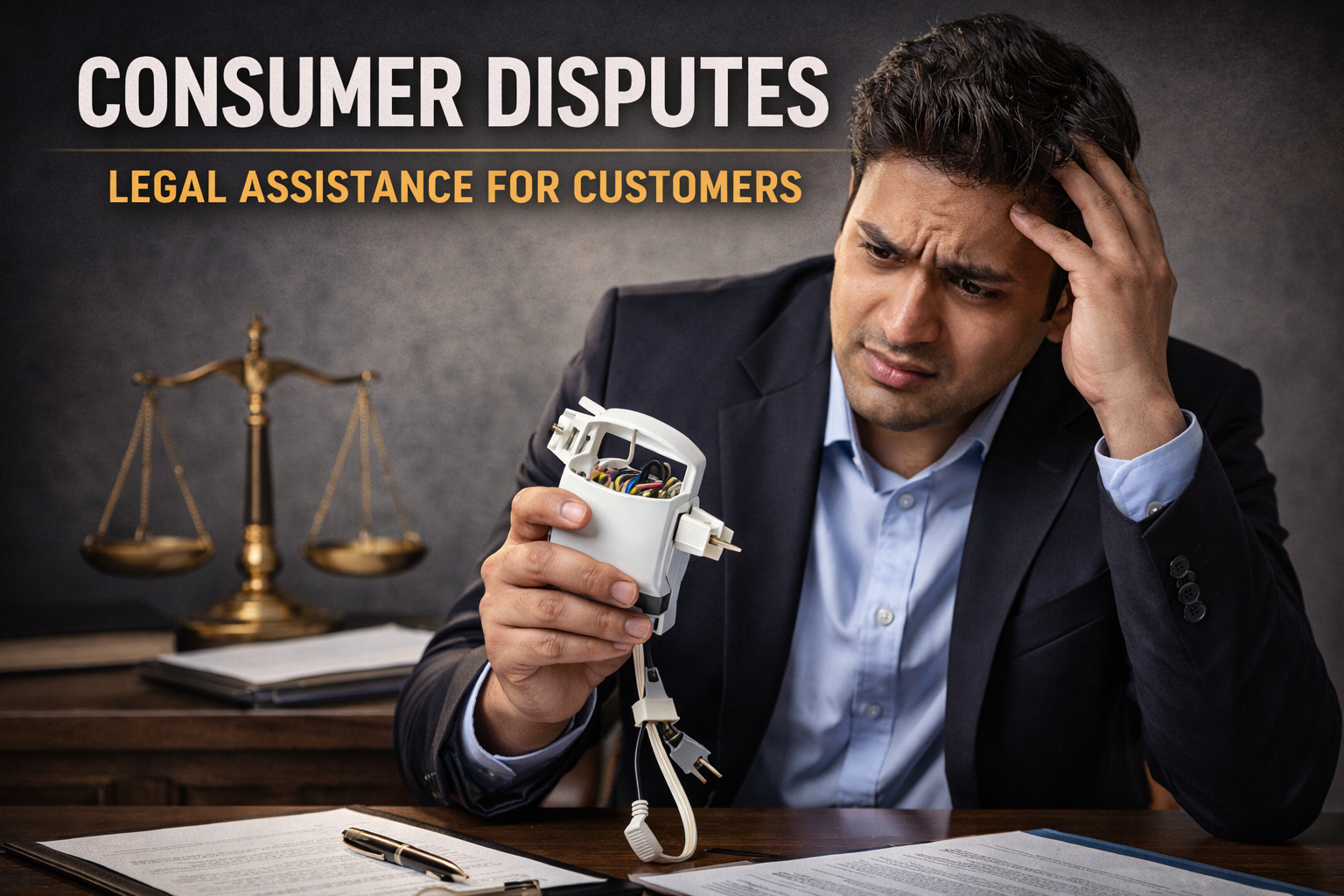
Consumer disputes have become increasingly common in today’s marketplace, especially in metropolitan cities like New Delhi. With the rapid growth of online shopping, real estate projects, banking services, healthcare, and telecom services, consumers often face issues such as defective products, deficient services, unfair trade practices, and misleading advertisements.
Indian law provides strong legal protection to consumers against such exploitation. Awareness of consumer rights and timely legal action can help individuals seek justice and compensation effectively.
What Is a Consumer Dispute
A consumer dispute arises when a consumer suffers loss or injury due to unfair trade practices, defective goods, or deficiency in services provided by a seller, manufacturer, or service provider.
Under the Consumer Protection Act, 2019, a consumer is any person who purchases goods or avails services for consideration, excluding commercial use.
Consumer disputes can arise in various sectors, including real estate, banking, insurance, medical services, e-commerce, education, and utilities.
Common Types of Consumer Disputes in India
Consumer disputes may take several forms, including:
Defective Goods
Products that are damaged, substandard, expired, or not as advertised.
Deficiency in Services
Poor or negligent services provided by banks, builders, hospitals, insurance companies, telecom operators, or service providers.
Unfair Trade Practices
False advertisements, misleading claims, hidden charges, and deceptive marketing practices.
Medical Negligence
Improper treatment, lack of care, or professional negligence by medical practitioners or hospitals.
Real Estate Disputes
Delay in possession, poor construction quality, deviation from approved plans, or failure to provide promised amenities.
Consumer Rights Under Indian Law
The Consumer Protection Act, 2019 guarantees several important rights to consumers, including:
-
Right to safety against hazardous goods and services
-
Right to be informed about quality, quantity, price, and standards
-
Right to choose from a variety of goods and services
-
Right to be heard and seek redressal
-
Right to compensation for unfair practices or negligence
These rights empower consumers to hold service providers and sellers accountable.
Consumer Dispute Redressal Commissions in India
Consumer disputes are adjudicated by specialised consumer courts known as Consumer Dispute Redressal Commissions. These are structured at three levels:
District Consumer Commission
Handles cases where the value of goods or services does not exceed ₹1 crore.
State Consumer Commission
Handles cases above ₹1 crore and up to ₹10 crores.
National Consumer Commission
Handles cases exceeding ₹10 crores and appeals from State Commissions.
For consumers in New Delhi, including areas like Jangpura Extension, district consumer commissions provide an accessible and efficient forum for resolving disputes.
How to File a Consumer Complaint
A consumer complaint can be filed by:
-
The affected consumer
-
A recognised consumer association
-
Multiple consumers with the same grievance
-
Legal heirs in case of death
The complaint should include details of the transaction, deficiency or defect, supporting documents, and the relief sought. Complaints can be filed physically or electronically, depending on the forum.
Legal assistance ensures proper drafting, jurisdiction selection, and effective presentation of the case.
Reliefs Available in Consumer Dispute Cases
Consumer courts are empowered to grant various remedies, including:
-
Refund of the amount paid
-
Replacement or repair of defective goods
-
Compensation for financial loss and mental harassment
-
Removal of defects or deficiencies
-
Discontinuation of unfair trade practices
-
Punitive damages in appropriate cases
The objective is to provide fair compensation and prevent future exploitation.
Importance of Legal Assistance in Consumer Disputes
Although consumer courts follow a simplified procedure, consumer dispute cases often involve technical evidence, contractual terms, and legal interpretation. An experienced consumer dispute lawyer assists by:
-
Assessing the merits of the case
-
Drafting precise and legally sound complaints
-
Representing the consumer before the commission
-
Handling objections and appeals
-
Ensuring enforcement of court orders
Professional legal guidance significantly increases the chances of a favourable outcome.
Limitation Period for Filing Consumer Complaints
A consumer complaint must generally be filed within two years from the date on which the cause of action arises. Delays may weaken the case and require separate justification before the court.
Taking timely legal action is crucial for protecting consumer rights.
Consumer Awareness in New Delhi
New Delhi has seen a rise in consumer disputes related to real estate, healthcare, online marketplaces, and financial services. Consumer courts in Delhi actively address grievances and provide relief where deficiencies are proven.
Residents of areas such as Jangpura Extension benefit from proximity to consumer forums and legal professionals specialising in consumer law.
Conclusion
Consumer disputes can cause significant financial loss and emotional stress. Indian consumer law offers strong legal remedies to protect individuals from unfair practices and negligent services. Understanding consumer rights and seeking timely legal assistance are essential steps towards effective redressal.
Consumers facing disputes should not hesitate to assert their rights through appropriate legal channels to ensure justice and accountability.