
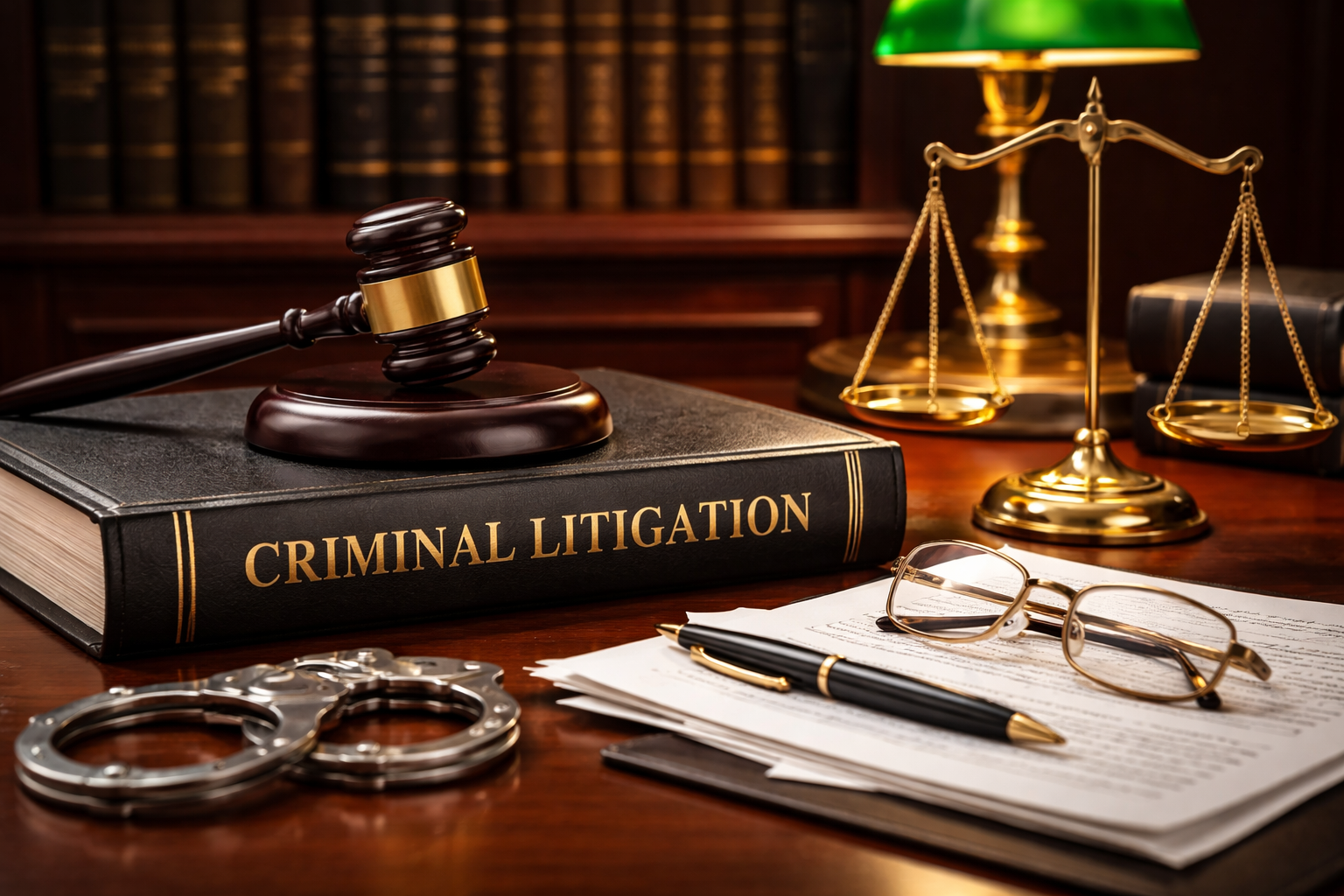
A Complete Guide for Citizens and Businesses
Criminal litigation plays a crucial role in maintaining justice, protecting rights, and ensuring that laws are enforced fairly. In India, criminal law governs offenses that harm individuals, society, or the state. Understanding criminal litigation and the legal rights available to citizens and businesses is essential for navigating legal challenges effectively.
Whether it involves financial fraud, corporate crimes, personal disputes, or serious criminal allegations, the criminal justice system provides structured procedures to ensure fairness, accountability, and protection of fundamental rights.
This guide explains the criminal litigation process in India, the legal rights of individuals and businesses, and the importance of professional legal representation.
Understanding Criminal Litigation in India
Criminal litigation refers to the legal process through which crimes are investigated, prosecuted, and adjudicated in courts. The system is designed to determine guilt or innocence while ensuring the protection of constitutional rights.
In India, criminal litigation is primarily governed by the Code of Criminal Procedure (CrPC), Indian Penal Code (IPC), and the Indian Evidence Act. These laws define criminal offenses, outline investigation procedures, and regulate the admissibility of evidence in courts.
The process usually begins when a criminal complaint is filed or an FIR (First Information Report) is registered with the police. Once the investigation is completed, the case may proceed to trial before a competent court.
Criminal litigation can involve a wide range of cases, including:
- Financial fraud and white-collar crimes
- Cheque bounce cases
- Cybercrime and digital fraud
- Assault and bodily offenses
- Corporate criminal liability
- Economic offenses and money laundering
For businesses, criminal litigation may arise from regulatory violations, financial disputes, or allegations of fraud and corruption.
Key Stages of Criminal Litigation
Understanding the stages of criminal litigation helps individuals and organizations prepare for legal proceedings.
1. Filing of FIR or Criminal Complaint
The criminal litigation process often begins with the filing of an FIR with the police. The FIR records the details of the alleged offense and triggers the formal investigation process.
In certain situations, a private complaint can also be filed directly before a magistrate if the police fail to register the FIR.
2. Police Investigation
Once an FIR is registered, the police initiate an investigation to collect evidence, record witness statements, and examine relevant documents.
The investigation may include:
- Interrogation of suspects
- Collection of forensic evidence
- Examination of financial records
- Digital evidence analysis
After completing the investigation, the police submit a charge sheet to the court if sufficient evidence exists.
3. Arrest and Bail
In serious criminal cases, the accused may be arrested during the investigation. However, the law also provides important safeguards to protect individual liberty.
Courts may grant different types of bail, including:
- Regular bail
- Anticipatory bail
- Interim bail
Bail ensures that the accused can remain free while the trial is ongoing, provided certain conditions are met.
4. Framing of Charges
Once the court examines the charge sheet, it determines whether there is sufficient evidence to proceed with the trial.
If the court finds prima facie evidence, formal charges are framed against the accused. At this stage, the accused has the opportunity to challenge the charges.
5. Trial and Evidence
The trial is the most critical stage of criminal litigation. During the trial
- The prosecution presents evidence and witnesses.
- The defense cross-examines witnesses.
- Documentary and forensic evidence is examined.
The court evaluates the credibility of evidence before reaching a decision.
6. Judgment and Sentencing
After reviewing all arguments and evidence, the court delivers its judgment.
If the accused is found guilty, the court imposes a sentence according to the applicable law. If the prosecution fails to prove the case beyond reasonable doubt, the accused is acquitted.
7. Appeals and Legal Remedies
The criminal justice system allows parties to challenge court decisions through appeals.
An appeal can be filed in higher courts such as:
- Sessions Court
- High Court
- Supreme Court of India
This appellate system ensures that legal errors or procedural violations can be corrected.
Legal Rights of Citizens in Criminal Litigation
Indian law provides several fundamental rights to protect individuals involved in criminal proceedings.
Right to Legal Representation
Every accused person has the right to consult and be defended by a lawyer of their choice. Legal representation ensures that the accused receives a fair trial.
Protection Against Self-Incrimination
Individuals cannot be forced to testify against themselves. This protection ensures that confessions are voluntary and legally valid.
Right to Fair Trial
A fair trial is a fundamental constitutional guarantee. Courts must ensure transparency, impartiality, and adherence to due process.
Right to Bail
In appropriate cases, the accused has the right to seek bail. Bail safeguards personal liberty while ensuring cooperation with the investigation.
Right to Appeal
If a party believes that the judgment is incorrect or unjust, they have the right to appeal before higher courts.
Criminal Liability for Businesses
Businesses and corporations can also face criminal prosecution in certain circumstances.
Corporate criminal liability may arise due to:
- Financial fraud or embezzlement
- Tax evasion
- Corporate corruption
- Environmental law violations
- Regulatory non-compliance
Company directors, managers, and officers may also face personal liability depending on their involvement in the alleged offense.
Businesses must therefore adopt strong compliance mechanisms and legal risk management strategies to avoid criminal exposure.
Importance of Legal Strategy in Criminal Litigation
Criminal litigation requires careful planning, evidence analysis, and courtroom advocacy. A well-planned legal strategy can significantly influence the outcome of a case.
Effective criminal defense often involves:
- Challenging the validity of evidence
- Identifying procedural violations
- Conducting detailed cross-examination
- Filing appropriate legal applications and motions
Early legal consultation can help individuals and businesses protect their rights and minimize legal risks.
Preventive Legal Measures for Businesses
Businesses can reduce criminal litigation risks by implementing proactive legal safeguards.
Some key preventive steps include:
- Conducting regular compliance audits
- Implementing anti-fraud policies
- Maintaining transparent financial records
- Training employees on legal and regulatory obligations
- Seeking legal advice before major business decisions
Strong corporate governance and legal awareness play a critical role in preventing criminal disputes.
Conclusion
Criminal litigation is a vital part of the justice system that ensures accountability, fairness, and protection of rights. For both citizens and businesses, understanding the legal process can help navigate complex criminal cases effectively.
From FIR registration and investigation to trial and appeals, each stage of criminal litigation requires careful legal analysis and professional guidance. Awareness of legal rights and responsibilities empowers individuals and organizations to respond appropriately when faced with criminal allegations.
With the support of experienced legal professionals and a strong understanding of the law, citizens and businesses can protect their rights while ensuring compliance with the legal system.